
Try the presets
They retune the wind above.
The same five presets /windlink gives you in game.
They drive the canvas in the hero, and with a conforming shaderpack installed they drive its
foliage too, without the pack author writing a line of preset handling.
The wind itself
One field, and its own clock.
The wind runs on a real-time clock of its own, decoupled from the world clock. A time-acceleration or seasons mod can speed the day up, slow it down or freeze it, and the wind keeps blowing smoothly, because it never reads the day clock for motion.
That clock is published to the shaderpack as well, so the mod's debris and the pack's foliage stay in phase to within a frame.
As of MCWIND v5 the debris is published too, not only the clock it rides on. A pack picks it up with one extra line in its grass branch, and blown leaves and torn grass draft the grass they skim past: the tuft a particle has just gone over bends in that particle's direction of travel, instead of merely sharing a wind with it. The draft is sheltered like the rest of the field, so dead air behind a wall does not keep a full-strength wash.
The differentiator
The terrain shapes the wind.
This is the part an analytic header cannot do on its own, because it needs to look at the actual world.
- Wakes. Wind slows in the lee of a hill, or a wall you built. The near field is checked block by block, so a one-block wall shelters properly instead of being stepped over.
- Crest speed-up. A slope rising into the wind accelerates the flow over the top.
- Valley funnelling. Wind squeezed between two walls channels along the corridor and picks up speed.
- Forest floor becalming. A canopy overhead quiets the air beneath it.
- Deflection. Wind blowing into a slope bends around it rather than through it.
The field re-solves when you place or break blocks, so a wall you have just built starts sheltering immediately rather than when you next walk away and come back.
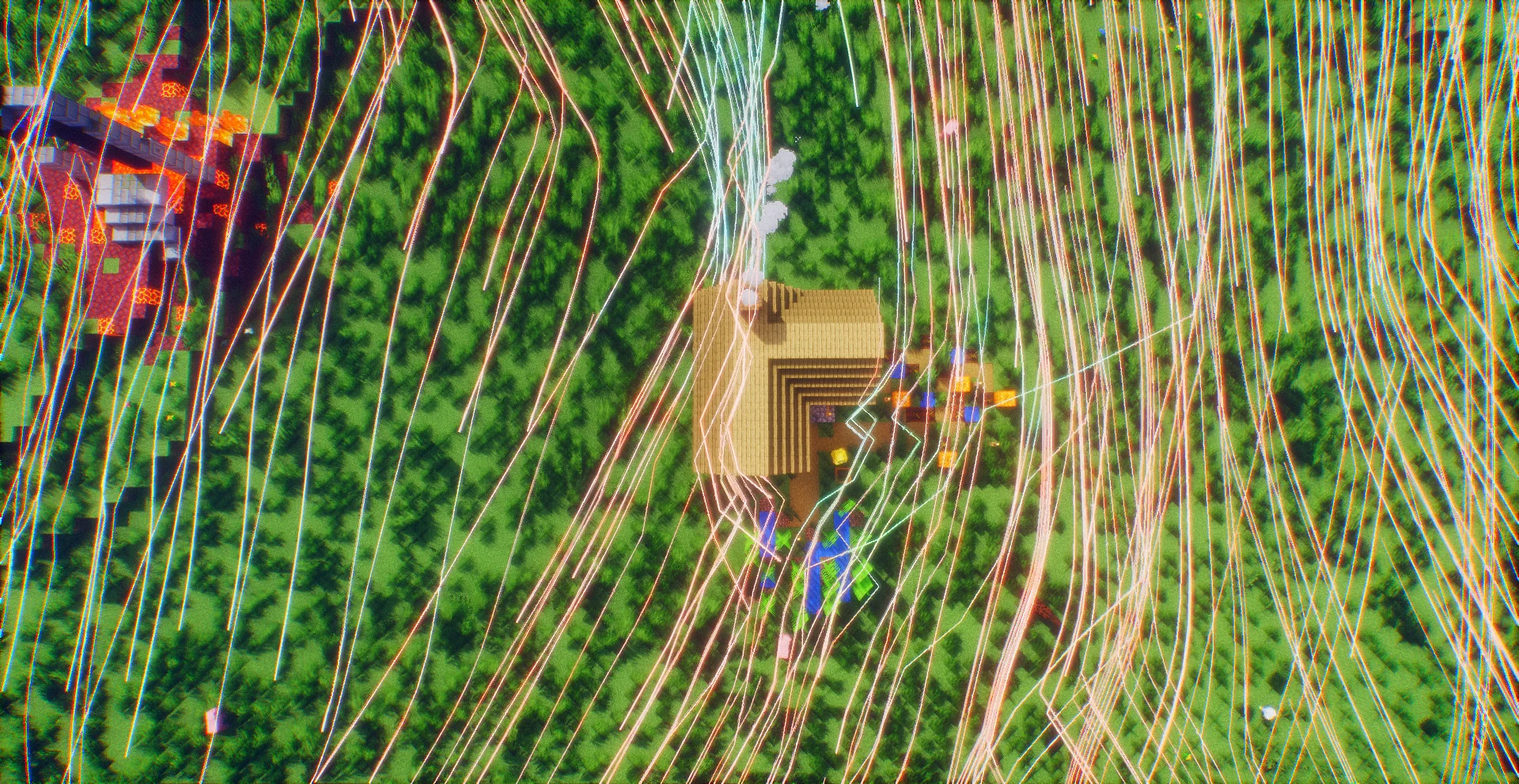
That is a normal survival house, not a test rig. Nothing was authored to make the wind do that: the solver read the blocks and the flow went around them.
Performance & honesty
What ships turned off, and why.
- The per-blade strand grass carpet.
- The ground-cover takeover.
- The light module.
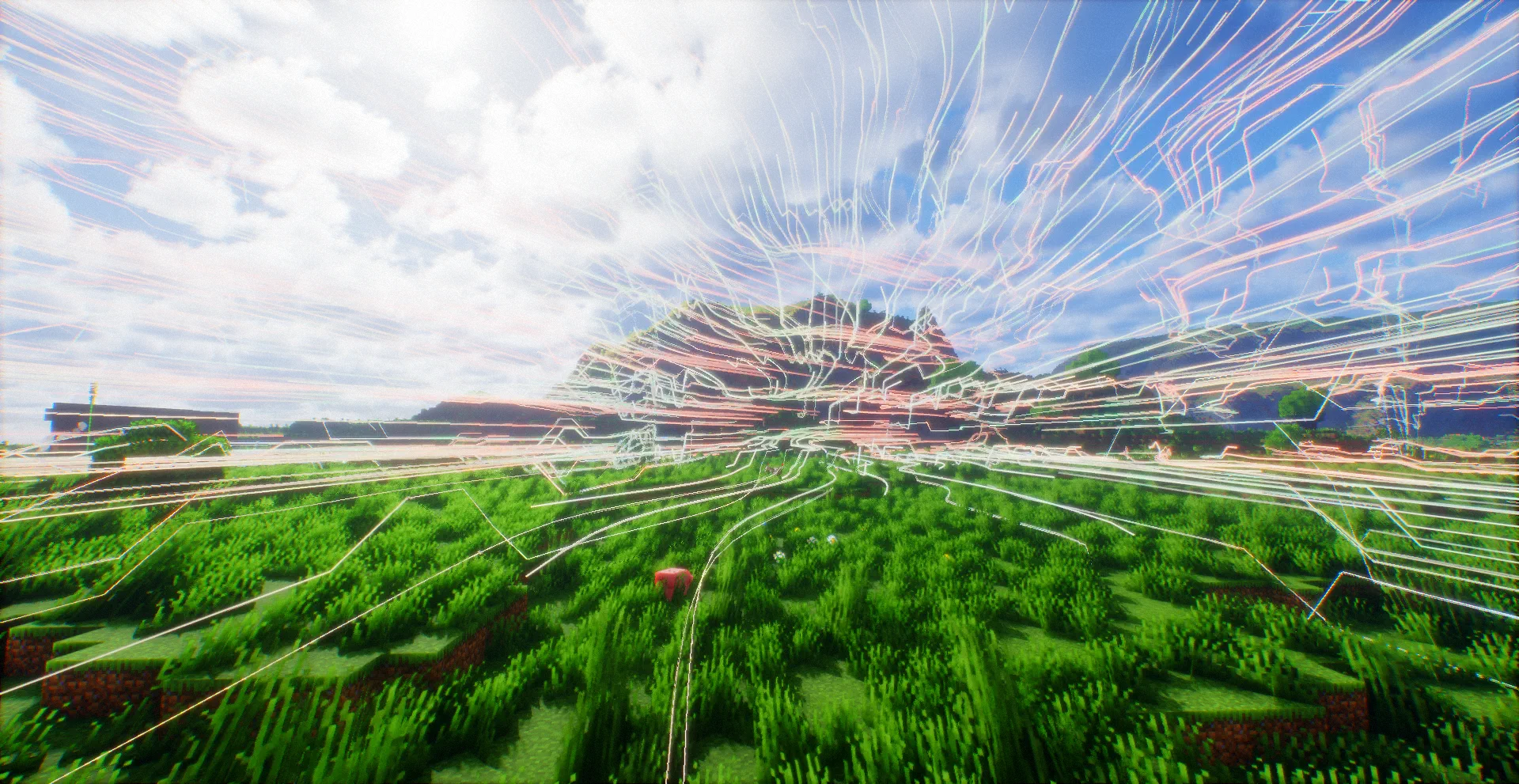
- The wind visualizer.
All four are real work with real cost, so they are opt-in rather than sprung on you. Check the settings screen before reporting them missing.